There’s a familiar kind of frustration many plumbing projects experience. Everyone is technically working on the same plan, but no two installations seem to come out the same.
One team takes a route behind the vanity. Another makes a slightly tighter bend to avoid an obstruction. A connection point shifts because another service got there first. By bathroom number 20, what should have been a repeated installation developed into different versions of itself.
As tempting as it is to assume a more flexible piping material will solve these problems, PEX AL PEX piping can only do so much. It can give installers better flexibility, but the decisions around it influence how beneficial it will be.
That is where good project planning earns its keep. A reliable multi-layer pipe system still needs coordinated drawings, sensible routes, correctly specified components and a consistent installation method.
The First Installation Problem May Already Be on the Drawing
Imagine a 40-unit residential development where the bathrooms are nominally identical. The drawings show the plumbing points but leave routing decisions largely to site teams. Crew A routes one way. Crew B chooses another. By unit 15, what was meant to be a repeatable installation has several variations hidden behind identical walls.
The pipe hasn’t failed. Standardisation has.
Before a pipe is bent, cut, or connected, there’s a set of decisions that already shape how successful installation can be.
- Where will services run?
- Are the pipe sizes clearly specified?
- Have the bends and connection points been considered alongside electrical and structural finishes?
- Can important connections remain accessible where necessary?
Crew A may route around a structural element one way, while Crew B finds a completely different solution. Both installations may function, but quantities, installation time and connection locations change from one unit to the next.
The drawing should do more than show where water starts and ends. It should help create an understandable route that can be repeated and inspected.
Does Flexible Piping Solve Routing Problems?
Flexibility is useful precisely because real buildings don’t always offer perfectly straight routes. A PEX AL PEX pipe can accommodate changes in direction while reducing the need for unnecessary joints in suitable applications. But ‘flexible’ isn’t shorthand for ‘route it wherever there’s space’.
Bend planning, support, pipe sizing and connection positions still influence how comfortably the system will sit in the building. Forcing a tight direction change or allowing the pipe to place unnecessary stress on a connection removes much of the benefit of choosing a flexible system in the first place.
Products like Sunrindge’s Blue Corrugated PEX AL PEX Pipe Rolls can support well-planned concealed installations, with the emphasis on planned. Flexibility should make a route easier to execute, and not be the reason the route is decided halfway through an installation.
Repetition Is Where Good Planning Starts Paying Back
Commercial value from planning is much easier to notice when the same installation happens every time.
If we look at the 40-unit development again, saving a few minutes in one bathroom is useful. Creating a routing method that allows installers to approach the bathrooms with the same measurements, connection positions, and sequence is far more valuable. Teams develop their rhythms, which makes quantities easier to anticipate. Supervisors then know what they should be seeing, and pressure testing can follow a predictable process.
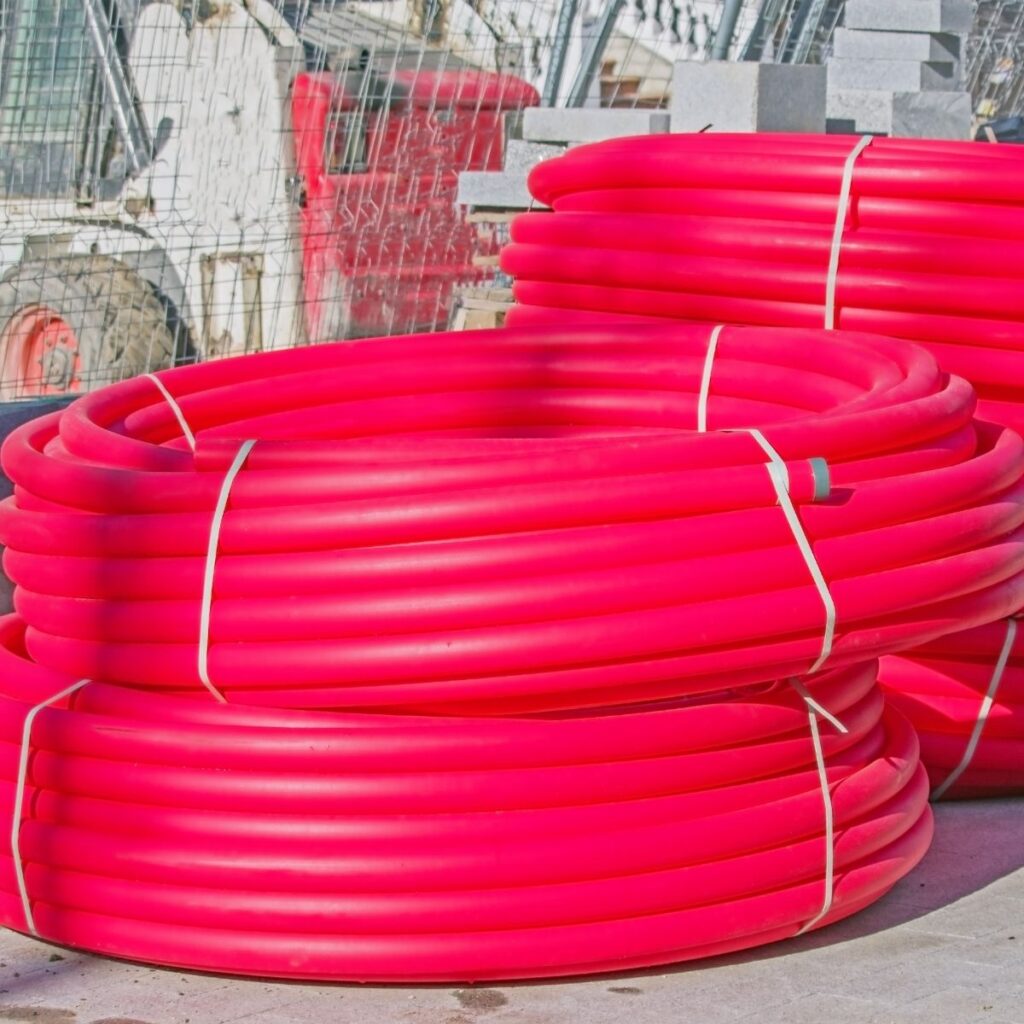
Even straightforward visual identification can contribute to consistency. Using a clearly specified product like a Red Corrugated PEX AL PEX Pipe as part of the planned service strategy already helps teams distinguish routes rather than relying on assumptions (especially when several services are occupying the same space).
Repeated layouts should be easier with every unit completed.
How Much Do Fitting and Joining Methods Matter?
Planning doesn’t stop at the pipe route. PEX AL PEX pipe and fittings should be considered as a coordinated system, including the connection method, installer familiarity, and component availability.
A last-minute fitting substitution may seem insignificant when a team is trying to keep the schedule moving. The problem is that even a small change can introduce a different installation method, different tolerances, or another variable future teams need to navigate. This is where plumbing systems compatibility and project planning intersect. Compatibility asks whether components are designed to work together. Planning asks whether the correct components will be available, specified and installed consistently across a project.
The goal isn’t to have a connection that works today. The same dependable connection should also be achieved tomorrow, next week and in the final unit.
Where Does Pressure Testing Fit into Project Quality?
Pressure testing is an important checkpoint, but it shouldn’t be the first instance an installation method approach is discovered to work. Testing becomes valuable when it’s treated as feedback.
On repeated projects, testing observations can improve subsequent installations. Finding a problem before finishing closes the wall is valuable. Understanding why it happened and preventing it from recurring in the rest of the units is even better.
That shift in pressure testing from a final pass-or-fail exercise into part of project quality control. The pressure test should confirm the plan, not rescue it. That is project intelligence.
The Best Material Still Depends on the People Installing It
Installation consistency is just as important as product consistency. An experienced plumber may notice things not on a spec sheet: connections needing unusual force, bends that feel too stressed, fittings that don’t behave the same.
It’s part of how plumbers judge whether a pipe is actually good. They also judge the environment around those products based on whether:
- Routes are clear
- The correct components are available
- The team follows the agreed installation method
Even an excellent PEX AL PEX pipe can’t create consistency if Crew A is solving different problems than Crew B.
Predictability Is Built Before Handover Day
The true advantage of a flexible piping system goes beyond its capability to bend around obstacles or make installation easier. It’s also noticeable when that same flexibility supports a project that’s been designed for repeatability.
A PEX AL PEX pipe can allow a project to become cleaner, faster, and more predictable. The team still has to turn that opportunity into a standard everyone follows.
Because the easiest handover is the one where no team had to improvise in the first place.