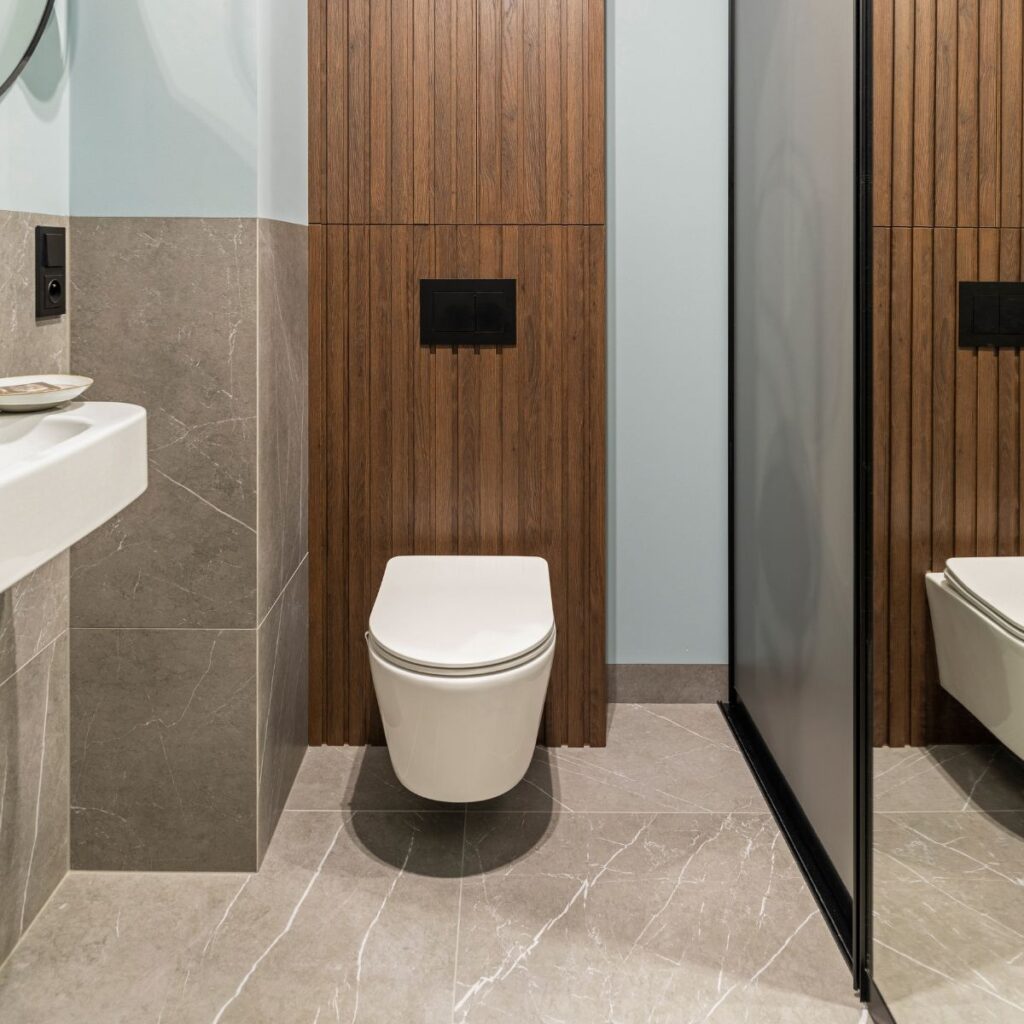
The one part of the concealed cistern story that doesn’t make it to the brochure is what happens when someone has to reach it. At that stage, the tiles are placed, the paint has dried, and the plate is the only sign that there’s something behind the wall. Exactly what you want in a hotel setting, a retail development, or even if you like the ‘clean bathroom’ look in your home.
The seals and valves still wear just like any other cistern, but the access route is what’s changed. So now there’s another question: where does the work happen and who will be doing it?
Hotels Hide the Cistern from Guests and Plan Access for Staff
Hospitality and retail buildings have used the concealed cistern for a long time, and their thinking is worth borrowing. Guests see a clean wall and a neat flush plate. Behind it, the maintenance team generally has a route of its own, like a service duct or room, so a worn seal never depends on opening the wall in view of guests each time. Hiding the cistern from the public and keeping it reachable for staff are two separate design decisions, and commercial buildings usually make both deliberately.
A house, guest house or short-let usually won’t have a service duct, so staff access has to be answered some other way. And practicality is where planning often stops short.
The Residential Route: Flush Plates Are the Way In
On many concealed systems, flush plates double as the opening to the mechanism and system, so it’s what the user presses and what the plumber removes. Sunridge’s RIIFO Concealed Cistern is supplied without a flush plate, and the actuator frame is a separate product, so a complete set means choosing the cistern, the frame and the plate as three separate items.
The square RIIFO Flush Plate in brushed chrome stainless steel is one of a selection that also includes white and black, and it will be one of the most handled surfaces on the wall. If it’s also the route in, it will be removed and refitted over the life of the bathroom. Whether it’s the only route in depends on how the cistern was positioned and installed, which is worth settling before the wall gets closed up.
A Bathroom Out of Service Is a Cost the Cistern Never Shows
Picture a guest room where housekeeping reports a cistern that keeps running. With an open cistern, the lid comes off, the fault shows in a minute. When it’s hidden, the entire room is out of use until the plate is removed, the isolation point is found, and the fill valve is reached, often with limited sight of the mechanism. Each hour the room is unavailable is an hour it can’t be sold. While the upside of a concealed cistern is a cleaner wall and a bit more room, access can become challenging if it wasn’t properly planned.
The decisions that keep that repair time shorter are made before the wall closes. For actuation, the RIIFO Actuator Frame secures the cistern and holds the flush plate, so its position sets where the opening sits. Before the tiler arrives, ask the installer to run the first service call. Remove the plate, reach the fill valve, close the isolation point, and put everything back. If any step needs a second pair of hands, the frame should be moved, while it’s still free to do so.
The pipework feeding the cistern ends up behind the same closed wall. Anything not meant to be revisited should come from a system with a track record, like Sunridge’s multi-layer piping with sixteen years of use in South Africa behind it.
Forty Rooms Fitted with the Same Concealed Cistern Need One Set of Spares
A hotel or guest house with forty rooms that all use the same cistern, plate and pan has one maintenance routine to learn and one set of parts to hold. That’s it. With three different cisterns, parts become a mismatched mess. That’s the practical case for specifying them as one system. A wall-hung pan like the Lavé Adelene Rimless Wall-Hung Pan comes from a range made to pair with concealed systems, which keeps the full set with one supplier.
The South African construction industry demands plumbing solutions that are reliable, compliant and readily available. For a cistern behind a wall, that means asking before the order is placed whether the plate, frame and internal parts will still be available locally in a few years. Parts that work together on installation day also have to keep doing so as they wear, as explored in long-term toilet flush system performance.
Concealed or Conventional? Ask Who Will Be Servicing It in Year Five
A concealed cistern suits a bathroom with the wall depth for it, an opening that has been planned and a plumber who has reached this mechanism before. A conventional cistern is easier to live with where repairs are frequent, or the person fixing them changes from one call to the next. A property with a single bathroom makes the strongest case for it, because there is no second room to move a guest into.
The deciding question is who will be servicing it in year five and how long the bathroom can afford to be out of use while they do.
How that sits within the wider layout is covered in our look at cistern choices made early in a bathroom layout.
Decide Where the Work Will Happen Before the Wall Closes
A concealed cistern takes the mechanism out of sight and leaves the maintenance exactly where it was, only behind a wall. Hotels plan for that with a service route of their own. Homes and smaller properties can do the same by settling the opening, the isolation point and the spares before the tiles go on, which keeps tomorrow’s repair a contained job.
At Sunridge, we’re proud to supply the products that make modern living possible. One pipe, one fitting and one project at a time.